Projects
/
Interactive Tangible Content Exploration Table
Event Tech
Overview
At a global international education fair, XCL World Academy aimed to present its academic philosophy, programs, and student opportunities in a way that would stand out in a crowded exhibition environment. Traditional brochures and static displays often fail to capture attention or convey complex institutional information effectively.
To solve this challenge, an interactive tangible interface was designed and developed to transform complex institutional information into a simple, engaging, and intuitive experience. The installation combined physical objects, touch interaction, and RFID technology to create a hands-on discovery journey for visitors.
The objective was clear: make exploration of the academy’s offerings interactive, memorable, and easy to understand within a short engagement time typical at large fairs.
The Challenge
Education institutions often need to communicate a large amount of information—academic programs, facilities, global opportunities, curriculum structure, and student life. At exhibition environments such as international fairs, visitors typically spend only a few minutes at each booth.
XCL World Academy needed a solution that could:
• Simplify complex information into quick, digestible interactions
• Encourage visitors to physically engage with the booth
• Support conversations between school representatives and parents/students
• Present multimedia content without overwhelming users
The solution had to be visually attractive, technologically reliable, and simple enough for anyone to use without instructions.
The Solution
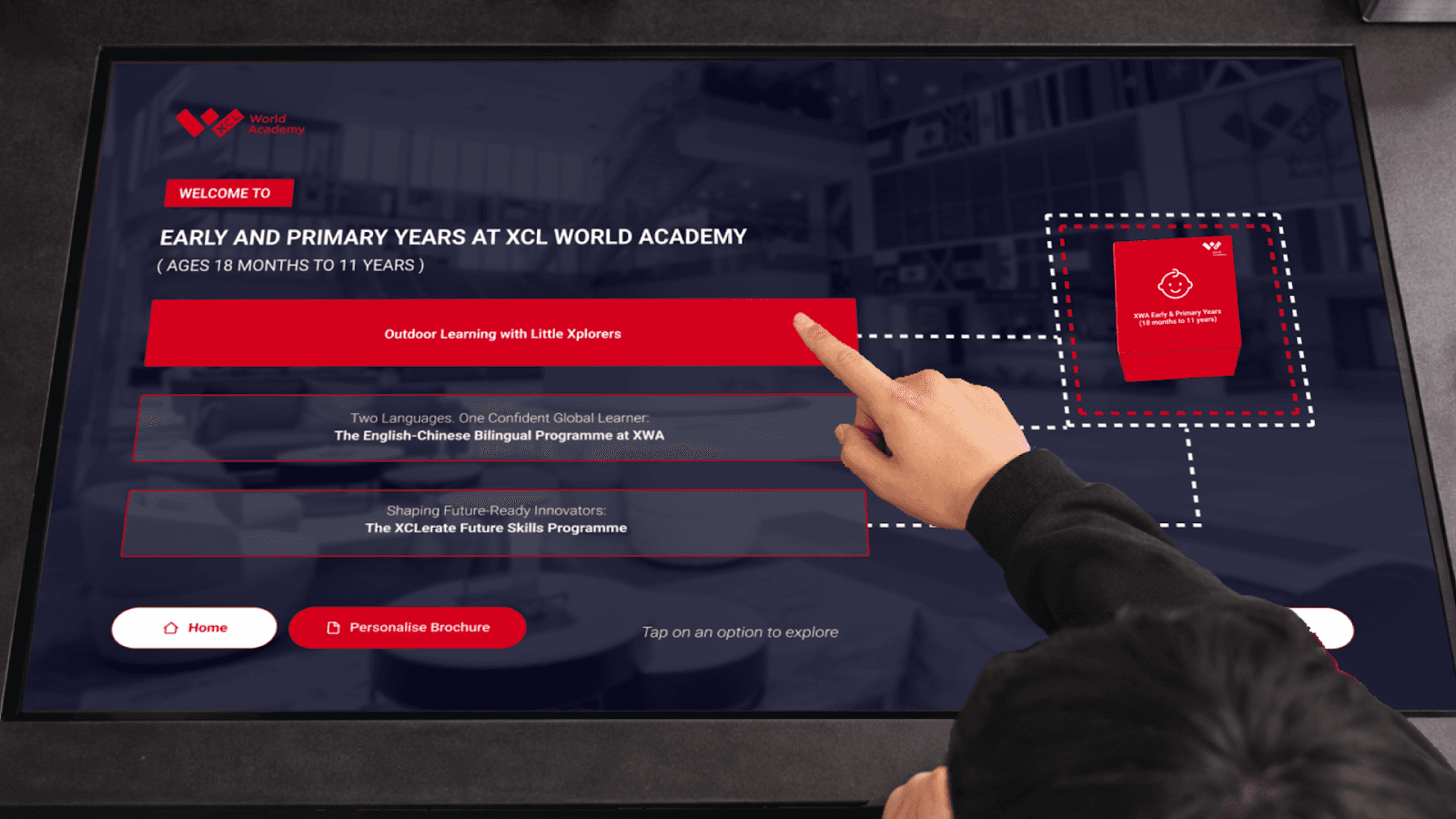
A tangible interaction system was designed where physical cubes representing different topics could be placed onto an interactive table to reveal related content on a larger screen.
Instead of browsing through menus or tapping through multiple pages, visitors interacted with physical objects to explore information. Each cube represented a key theme such as academics, facilities, global exposure, student life, or admissions.
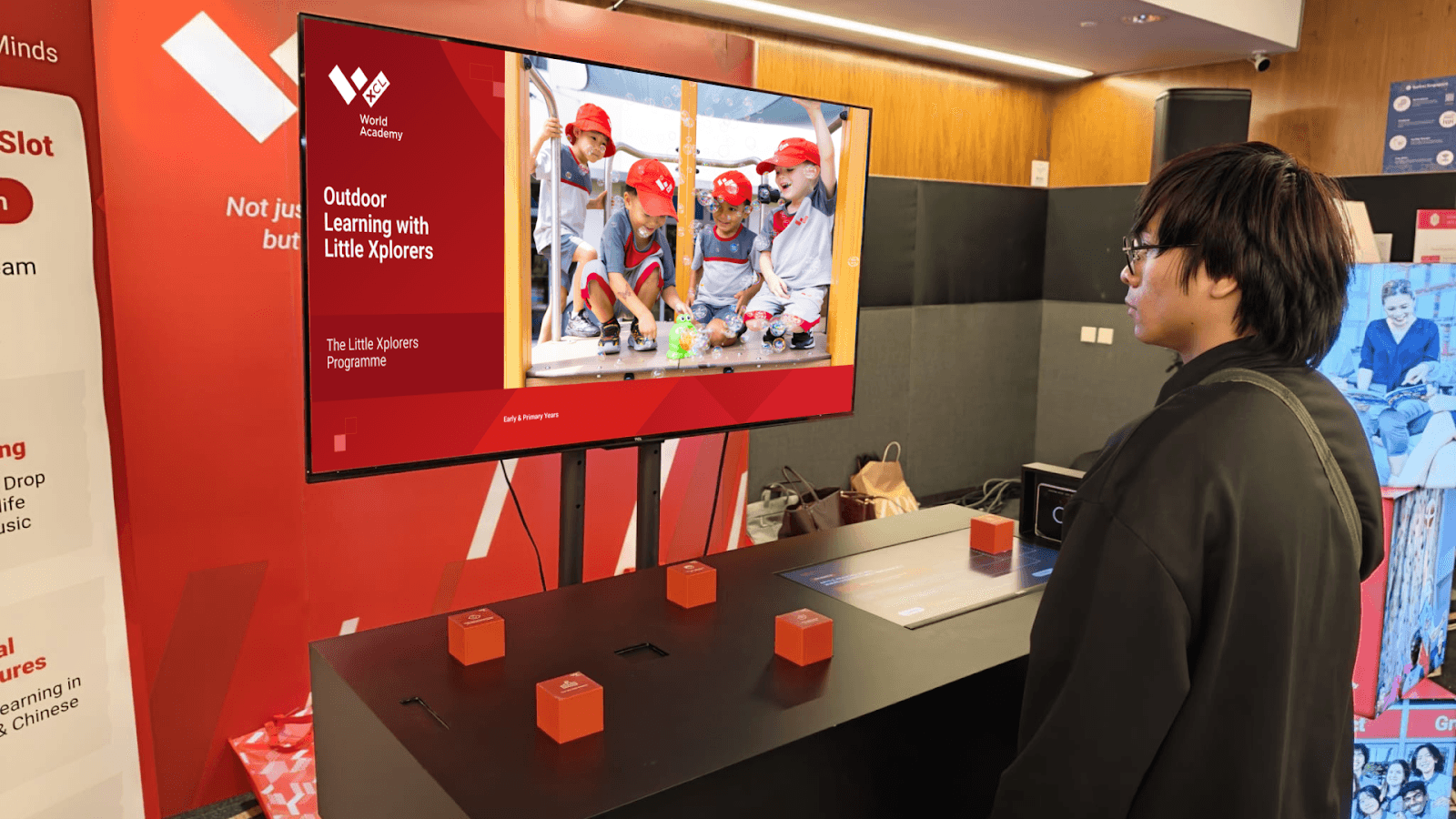
The experience was structured around a two-screen system:
1. 32-inch Touchscreen Table Interface
A compact touchscreen embedded in the table acted as the primary interaction surface. The screen displayed a visual interface with clearly marked zones where users could place the cubes.
2. Large Display Screen
A larger screen positioned behind the booth displayed rich multimedia content—videos, images, and key messages—based on the cube placed on the table.
This two-layer interaction allowed users to control the experience at the table while the audience could view the content on the larger display.